
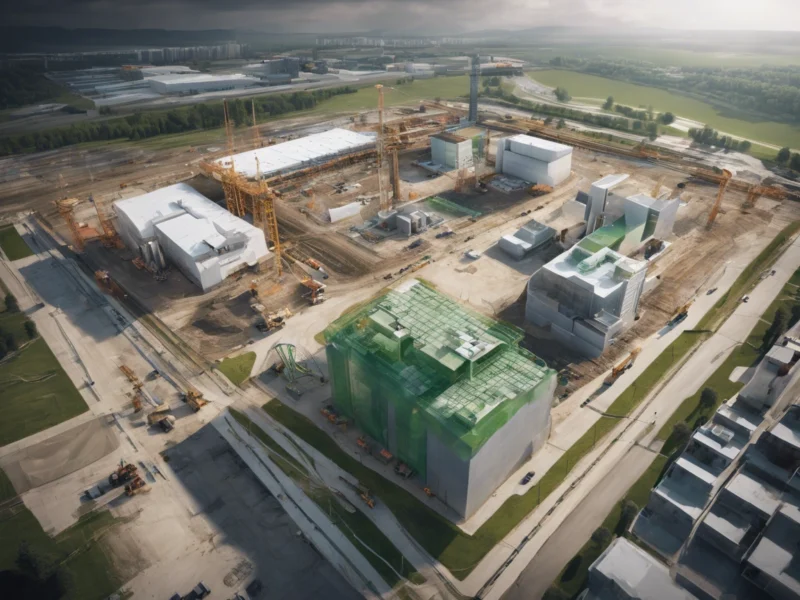
The engineering and construction industries have always been at the forefront of technological advancement. From the early days of manual drafting to the use of cutting-edge software for project management, innovation has driven the evolution of how we design, build, and maintain infrastructure. At BUCIDA Engineering & Consultancy Sdn. Bhd., we are proud to be part of this transformation, leveraging the latest technologies to deliver superior results for our clients. In this article, we explore how technological innovation is reshaping the construction industry and why staying ahead of the curve is crucial for success.
1. Digital Design & 3D Modeling: Visualizing Success Before It Begins
One of the most significant advancements in the engineering world is the use of digital design tools and 3D modeling. Gone are the days when projects were designed on paper, leaving room for misinterpretation or errors. Today, software like Building Information Modeling (BIM) allows engineers, architects, and contractors to collaborate on detailed, highly accurate 3D models of structures before construction begins.
At BUCIDA, we use advanced modeling tools to create detailed designs that enable clients to visualize their projects before a single brick is laid. This approach improves collaboration, reduces errors, and allows us to foresee potential challenges before they become costly issues. By using BIM and other modeling software, we can optimize design choices, enhance material efficiency, and improve the overall sustainability of projects.
2. Prefabrication and Modular Construction: Building Faster and Smarter
Prefabrication and modular construction are changing the way we approach large-scale building projects. These techniques involve constructing building components off-site, then transporting and assembling them at the project location. Prefabrication can significantly reduce construction time and costs while improving the quality of the final structure.
At BUCIDA, we specialize in the fabrication of Unfired Pressure Vessels (UPVs) and other critical components for industrial projects. Our ASME-certified workshops use state-of-the-art machinery to fabricate parts with the highest level of precision. This allows us to maintain control over quality and ensure that every part of the project meets stringent industry standards. Prefabrication also reduces on-site disruption, making it a more efficient and sustainable way to build.
3. The Internet of Things (IoT) and Smart Construction Sites
The Internet of Things (IoT) is rapidly becoming a game-changer in the construction industry. IoT technology connects devices, machinery, and systems, allowing real-time data collection and monitoring on construction sites. This innovation has the potential to improve everything from equipment maintenance to workforce safety.
For example, at BUCIDA, we use IoT-enabled sensors to monitor the health of our machinery and equipment in real time. This proactive approach to maintenance ensures that our tools are operating at peak efficiency and reduces the risk of breakdowns that could delay a project. Additionally, wearable technology equipped with IoT sensors allows us to track the location and safety of workers on-site, further enhancing safety measures.
4. Drone Technology: The Eyes in the Sky
Drones have become invaluable tools in the construction and engineering sectors, offering a bird’s-eye view of large project sites and hard-to-reach areas. These unmanned aerial vehicles can perform a wide range of tasks, including site surveys, inspections, and progress tracking, all with increased accuracy and speed.
At BUCIDA, we use drones to carry out aerial inspections of our sites, particularly for complex projects involving large infrastructure. Drones allow us to gather data quickly and efficiently, ensuring that projects are progressing according to plan. They also provide detailed imagery and data that help in making informed decisions during the construction process. This technology reduces the need for manual inspections, enhancing safety while improving overall project management.
5. Green Engineering and Sustainability: The Future of Construction
As concerns about climate change and environmental degradation grow, the construction industry is evolving to incorporate sustainable practices. Green engineering aims to reduce the environmental impact of construction by optimizing energy use, minimizing waste, and using eco-friendly materials.
At BUCIDA, sustainability is a key focus of our operations. We strive to reduce our environmental footprint by incorporating energy-efficient technologies, using sustainable materials, and designing projects that are not only functional but also environmentally responsible. Our engineers are trained in green building practices, ensuring that every project we undertake aligns with global sustainability goals.
6. The Rise of Artificial Intelligence (AI) in Construction
Artificial Intelligence (AI) is revolutionizing the construction industry by enhancing productivity, predicting risks, and improving decision-making processes. AI algorithms can analyze vast amounts of data to optimize construction schedules, improve design efficiency, and even forecast potential project risks based on past data.
BUCIDA is committed to harnessing the power of AI in project management. By integrating AI tools into our workflow, we can improve the accuracy of project timelines, optimize resource allocation, and reduce the risk of delays. AI also helps us predict and prevent potential safety hazards by analyzing data from previous projects, enabling us to create safer working environments for our team.
Conclusion: Embracing the Future of Engineering and Construction
The future of engineering and construction lies in innovation, and companies that embrace technological advancements will lead the industry forward. At BUCIDA Engineering & Consultancy, we are constantly exploring new ways to integrate cutting-edge technology into our projects, ensuring that we stay ahead of industry trends and deliver exceptional results for our clients.
By leveraging innovations such as digital design, IoT, drones, AI, and sustainable practices, we are not only improving the efficiency of our operations but also contributing to a safer, more sustainable future for the construction industry.